Approach and Priorities for Addressing Gender-Based Violence
Consultation has concluded
The Gender-Based Violence Committee of Cabinet (GBVCC) recognizes that effectively addressing gender-based violence requires examining what supports currently exist, identifying opportunities for improvement and supporting community effort.
Manitoba's Framework for Addressing Gender-Based Violence
The GBVCC is developing a framework to communicate how the Manitoba government is organized to address gender-based violence in Manitoba. The framework will include priority action areas based on input and recommendations from recent engagements and stakeholder meetings, combined with research and reports. This engagement is the next step to launching Manitoba’s framework for addressing gender-based violence.
Provide Feedback
We are seeking your knowledge and expertise in gender-based violence to help inform the framework.
Review the project background before providing your feedback online by October 15, 2020. A What We Heard report summarizing the engagement findings will be released in the winter of 2020.
This information is available in alternate formats upon request. Please contact msw@gov.mb.ca.
The Gender-Based Violence Committee of Cabinet (GBVCC) recognizes that effectively addressing gender-based violence requires examining what supports currently exist, identifying opportunities for improvement and supporting community effort.
Manitoba's Framework for Addressing Gender-Based Violence
The GBVCC is developing a framework to communicate how the Manitoba government is organized to address gender-based violence in Manitoba. The framework will include priority action areas based on input and recommendations from recent engagements and stakeholder meetings, combined with research and reports. This engagement is the next step to launching Manitoba’s framework for addressing gender-based violence.
Provide Feedback
We are seeking your knowledge and expertise in gender-based violence to help inform the framework.
Review the project background before providing your feedback online by October 15, 2020. A What We Heard report summarizing the engagement findings will be released in the winter of 2020.
This information is available in alternate formats upon request. Please contact msw@gov.mb.ca.
-
Project Background
What is Gender-Based Violence?
Gender-based violence is violence committed against someone based on their gender identity, gender expression or perceived gender. Gender-based violence can take many forms: cyber, physical, sexual, psychological, emotional, economic, neglect and harassment. Violence and abuse can have negative effects that span generations, and this often leads to cycles of violence and abuse within families, and sometimes whole communities. A list of gender-based violence definitions and terminology can be found here.
Gender-Based Violence Committee of Cabinet
Manitoba is proud to have enacted the province’s first Gender-Based Violence Committee of Cabinet (GBVCC). The GBVCC, chaired by the Minister responsible for the Status of Women, works across government departments to ensure government-wide coordination and collaboration to address gender-based violence (including sexual violence, intimate partner violence, sexual exploitation and Missing and Murdered Indigenous Women and Girls) in Manitoba. The GBVCC oversees and monitors the implementation of priority action areas related to gender-based violence.The GBVCC has a mandate to collaborate across departments to better address gender-based violence by using a whole-of-government approach that is comprehensive, inclusive and supports promising and best practices.
The GBVCC recognizes that effectively addressing gender-based violence requires examining what currently exists, identifying opportunities for improvement and supporting community efforts.
Manitoba's Framework for Addressing Gender-Based Violence
The GBVCC is developing a framework to communicate how the Manitoba government is organized to address gender-based violence in Manitoba. The framework will describe current provincial initiatives and set out priority areas for future action on gender-based violence. The actions outlined in the framework will be based on recommendations from various discussions with stakeholders – including a number of past consultations and engagements – as well as research and reports.Recent Consultations, Reports and Strategies
Addressing gender-based violence must be anchored in knowledge and experiences from people who are directly impacted. The framework actions will reflect recommendations from recent consultations, stakeholder meetings, reports and strategies, including:- Improving Access and Coordination of Mental Health and Addiction Services: A Provincial Strategy for all Manitobans (VIRGO report)
- Tracia’s Trust: Collaboration and Best Practice to End Sexual Violence and Sex Trafficking in Manitoba
- Winnipeg Safe City Scoping Study
- Pathways to a Better Future - Manitoba’s Poverty Reduction Strategy
- Truth and Reconciliation Commission of Canada: Calls to Action
- Reclaiming Power and Place: The Final Report of the National Inquiry into Missing and Murdered Indigenous Women and Girls
- Family Law Modernization Action Plan and Family Law Manitoba Online Hub
- Manitoba’s Policing and Public Safety Strategy
- Criminal Justice System Modernization Strategy
- Ongoing collaboration with the Family Violence Consortium of Manitoba and the Manitoba Association of Women’s Shelters
Please see additional information about important linkages between gender-based violence and the work of the GBVCC and reconciliation and Missing and Murdered Indigenous Women and Girls.
October 2020 Stakeholder Engagement
The GBVCC is seeking input from stakeholders involved in gender-based violence work. This engagement bridges recent consultations and engagements and is the next step to launching Manitoba’s framework for addressing gender-based violence.To complete the survey, click here. Your feedback is requested by October 15, 2020.
Consultation has concludedWhat is Gender-Based Violence?
Gender-based violence is violence committed against someone based on their gender identity, gender expression or perceived gender. Gender-based violence can take many forms: cyber, physical, sexual, psychological, emotional, economic, neglect and harassment. Violence and abuse can have negative effects that span generations, and this often leads to cycles of violence and abuse within families, and sometimes whole communities. A list of gender-based violence definitions and terminology can be found here.
Gender-Based Violence Committee of Cabinet
Manitoba is proud to have enacted the province’s first Gender-Based Violence Committee of Cabinet (GBVCC). The GBVCC, chaired by the Minister responsible for the Status of Women, works across government departments to ensure government-wide coordination and collaboration to address gender-based violence (including sexual violence, intimate partner violence, sexual exploitation and Missing and Murdered Indigenous Women and Girls) in Manitoba. The GBVCC oversees and monitors the implementation of priority action areas related to gender-based violence.The GBVCC has a mandate to collaborate across departments to better address gender-based violence by using a whole-of-government approach that is comprehensive, inclusive and supports promising and best practices.
The GBVCC recognizes that effectively addressing gender-based violence requires examining what currently exists, identifying opportunities for improvement and supporting community efforts.
Manitoba's Framework for Addressing Gender-Based Violence
The GBVCC is developing a framework to communicate how the Manitoba government is organized to address gender-based violence in Manitoba. The framework will describe current provincial initiatives and set out priority areas for future action on gender-based violence. The actions outlined in the framework will be based on recommendations from various discussions with stakeholders – including a number of past consultations and engagements – as well as research and reports.Recent Consultations, Reports and Strategies
Addressing gender-based violence must be anchored in knowledge and experiences from people who are directly impacted. The framework actions will reflect recommendations from recent consultations, stakeholder meetings, reports and strategies, including:- Improving Access and Coordination of Mental Health and Addiction Services: A Provincial Strategy for all Manitobans (VIRGO report)
- Tracia’s Trust: Collaboration and Best Practice to End Sexual Violence and Sex Trafficking in Manitoba
- Winnipeg Safe City Scoping Study
- Pathways to a Better Future - Manitoba’s Poverty Reduction Strategy
- Truth and Reconciliation Commission of Canada: Calls to Action
- Reclaiming Power and Place: The Final Report of the National Inquiry into Missing and Murdered Indigenous Women and Girls
- Family Law Modernization Action Plan and Family Law Manitoba Online Hub
- Manitoba’s Policing and Public Safety Strategy
- Criminal Justice System Modernization Strategy
- Ongoing collaboration with the Family Violence Consortium of Manitoba and the Manitoba Association of Women’s Shelters
Please see additional information about important linkages between gender-based violence and the work of the GBVCC and reconciliation and Missing and Murdered Indigenous Women and Girls.
October 2020 Stakeholder Engagement
The GBVCC is seeking input from stakeholders involved in gender-based violence work. This engagement bridges recent consultations and engagements and is the next step to launching Manitoba’s framework for addressing gender-based violence.To complete the survey, click here. Your feedback is requested by October 15, 2020.
Gender-Based Violence Committee of Cabinet
-
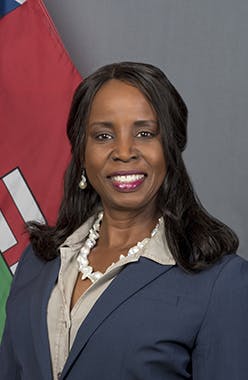
Minister of Sport, Culture and Heritage & Minister responsible for Status of Women
Chair of the Gender-Based Violence Committee of Cabinet
-
Minister of Families
-
Minister of Health, Seniors and Active Living
-
Minister of Justice and Attorney General
-
Minister of Indigenous and Northern Relations
-
Minister of Municipal Relations & Minister responsible for Francophone Affairs
-
-