Proposal to Protect the Seal River Watershed
Share your thoughts on a proposed plan to protect the Seal River Watershed, developed together by the Seal River Watershed Alliance, Manitoba and Canada.

A Pristine Landscape in Northern Manitoba

The Seal River Watershed, spanning over 50,000 square kilometres in northern Manitoba, is one of the largest ecologically intact watersheds in the world. Home to pristine lakes and wetlands, vast boreal forest and over 30 species at risk, the region holds immense ecological, cultural and economic value. It provides clean drinking water, carbon storage, and supports sustainable livelihoods through local food harvesting, ecotourism and conservation economies.

A Partnership to Protect the Watershed for All

In 2019, four Indigenous Nations—Sayisi Dene, Northlands Denesuline, Barren Lands, and O-Pipon-Na-Piwin Cree—formed the Seal River Watershed Alliance (the Alliance) to protect their ancestral lands through the establishment of an Indigenous Protected and Conserved Area (IPCA).

In early 2024, the Governments of Manitoba, Canada and the Alliance entered into an agreement to study the natural, economic, social and cultural impacts of creating a protected area in the watershed. The study concluded that establishing a protected area or areas in the watershed is feasible.

The Proposal

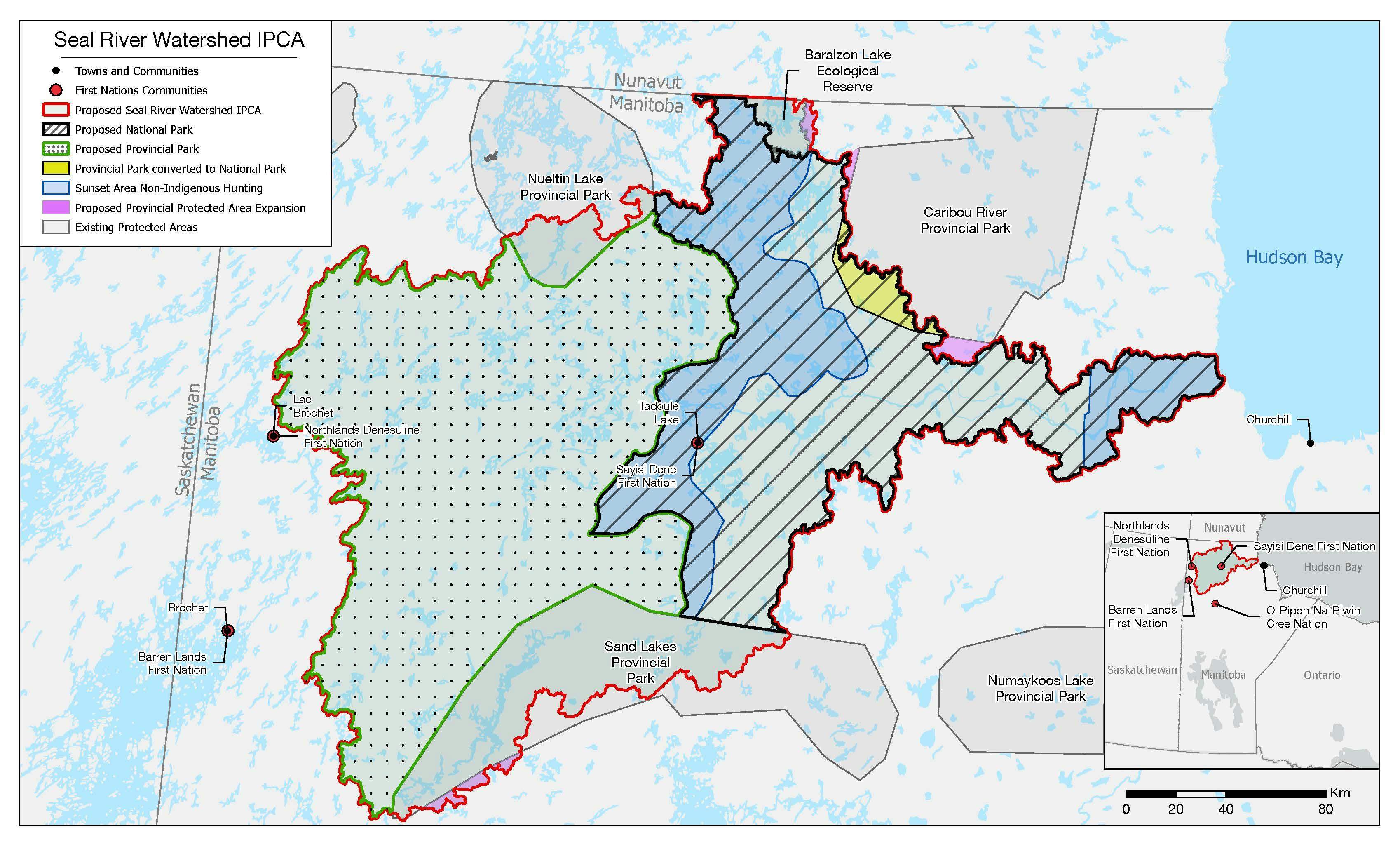
Working together, the Alliance, Manitoba and Canada are proposing to protect the Seal River Watershed with a “mosaic” of protection by creating an Indigenous Protected and Conserved Area (IPCA) that would include a new national park and a new provincial park.

Together, these protected areas would support:

  • long-term conservation and stewardship
  • sustainable tourism to welcome visitors
  • recreation, including hunting, fishing, hiking and paddling
  • economic development and job creation
  • honouring Indigenous ways of life.

The proposal includes establishing a joint management board appointed by the elected leadership of Indigenous governments, Canada, and Manitoba. The joint management board would operate by consensus, guide stewardship and decision-making, and develop a management plan rooted in science and Indigenous knowledge, local user and community input, and the interests of all Manitobans and Canadians.

Share Your Feedback

Before creating a new provincial park or changing the boundaries of an existing one, Manitoba must provide an opportunity for public consultation (Section 9(1) under The Provincial Parks Act). Boundary changes are also proposed for Sand Lakes and Caribou River provincial parks, as well as the Baralzon Lake Ecological Reserve. Creating a new national park would also require transfer of administration and control of Crown (Manitoba) lands to Canada.

The Alliance, Canada, and Manitoba are now seeking feedback from the public on the protected area proposal.

Read the proposal here: manitoba.ca/asset_library/en/engagemb/srw-english-protected-areas-proposal.pdf

Your comments must be received no later than June 2, 2026.


Share your thoughts on a proposed plan to protect the Seal River Watershed, developed together by the Seal River Watershed Alliance, Manitoba and Canada.

A Pristine Landscape in Northern Manitoba

The Seal River Watershed, spanning over 50,000 square kilometres in northern Manitoba, is one of the largest ecologically intact watersheds in the world. Home to pristine lakes and wetlands, vast boreal forest and over 30 species at risk, the region holds immense ecological, cultural and economic value. It provides clean drinking water, carbon storage, and supports sustainable livelihoods through local food harvesting, ecotourism and conservation economies.

A Partnership to Protect the Watershed for All

In 2019, four Indigenous Nations—Sayisi Dene, Northlands Denesuline, Barren Lands, and O-Pipon-Na-Piwin Cree—formed the Seal River Watershed Alliance (the Alliance) to protect their ancestral lands through the establishment of an Indigenous Protected and Conserved Area (IPCA).

In early 2024, the Governments of Manitoba, Canada and the Alliance entered into an agreement to study the natural, economic, social and cultural impacts of creating a protected area in the watershed. The study concluded that establishing a protected area or areas in the watershed is feasible.

The Proposal

Working together, the Alliance, Manitoba and Canada are proposing to protect the Seal River Watershed with a “mosaic” of protection by creating an Indigenous Protected and Conserved Area (IPCA) that would include a new national park and a new provincial park.

Together, these protected areas would support:

  • long-term conservation and stewardship
  • sustainable tourism to welcome visitors
  • recreation, including hunting, fishing, hiking and paddling
  • economic development and job creation
  • honouring Indigenous ways of life.

The proposal includes establishing a joint management board appointed by the elected leadership of Indigenous governments, Canada, and Manitoba. The joint management board would operate by consensus, guide stewardship and decision-making, and develop a management plan rooted in science and Indigenous knowledge, local user and community input, and the interests of all Manitobans and Canadians.

Share Your Feedback

Before creating a new provincial park or changing the boundaries of an existing one, Manitoba must provide an opportunity for public consultation (Section 9(1) under The Provincial Parks Act). Boundary changes are also proposed for Sand Lakes and Caribou River provincial parks, as well as the Baralzon Lake Ecological Reserve. Creating a new national park would also require transfer of administration and control of Crown (Manitoba) lands to Canada.

The Alliance, Canada, and Manitoba are now seeking feedback from the public on the protected area proposal.

Read the proposal here: manitoba.ca/asset_library/en/engagemb/srw-english-protected-areas-proposal.pdf

Your comments must be received no later than June 2, 2026.